Using the photo cards below, we told the story of the life cycle of a butterfly. Ask your child to describe/explain to you what is happening in each photo. This marks the beginning of our study of the butterfly life cycle.

Tuesday, April 6, 2010
Monday, April 5, 2010
FREE CHOICE FUN!
Friday, April 2, 2010
IS IT YUCKY OR YUMMY?!
In our letter story this week, a young yak learns that you should taste a new food first, before you decide if it's yummy or yucky. So, we provided the children with some foods today that many of them had never tried to encourage them to taste something before they decide if it's yucky or yummy. The children tasted starfruit, matzoh, a hard-boiled egg, avocado, and craisins. After tasting each food, the children colored a happy face if they thought the particular food was yummy or a sad face if they thought the particular food was yucky. Be sure to ask your child to see his/her chart.
Thursday, April 1, 2010
NEW LEARNING CENTERS
We introduced new learning centers today. Below are photos and descriptions of the new learning centers...
~RHYMING~
Children match together the rhymes using the picture clues or the words.
~PRODUCING AND RECOGNIZING NUMBERS~
Using magnetic numbers, children produce and recognize 2 or 3-digit numbers depending on their knowledge and skill.
~RHYMING~
Children match together the rhymes using the picture clues or the words.
Using magnetic numbers, children produce and recognize 2 or 3-digit numbers depending on their knowledge and skill.
Children match the lower case letter to the upper case letter and are then asked to identify the lower case letters in random order.
~SYLLABLE SEGMENTATION~
Children determine how many claps (syllables) are in the words below. They then put the corresponding number of "chips" on the card to represent how many claps (syllables) the word has.
Children are asked to hear and identify the ending sound of the word and put the corresponding letter on the card.
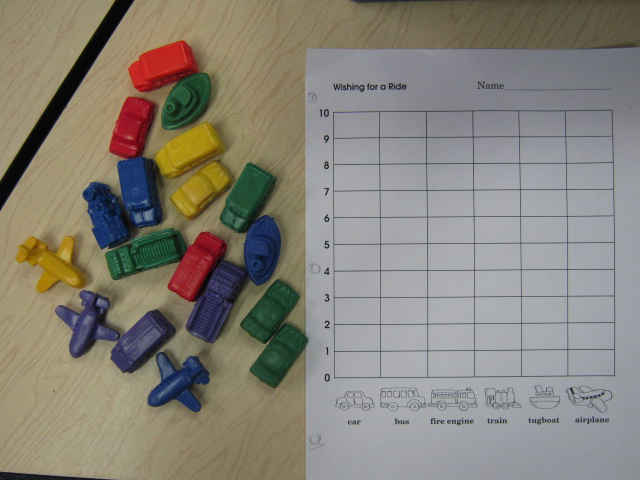
Children sort vehicles into groups; count the number of vehicles in each group; and then graph their results. Children are asked to "read" the graph by indicating which type of vehicle has the most and which type has the least. They are also asked if any of the groups or vehicles are equal.
~TANGRAMS~
Children practice and develop spatial reasoning skills using the math manipulative, tangrams.
Children practice and develop spatial reasoning skills using the math manipulative, geoboards.
MR. YAKSCOE READS TO PRE-K!
Subscribe to:
Posts (Atom)